Ableton shipped something on June 2 that changes the bargain between a DAW and the people who use it. The Extensions SDK, now in public beta, lets you write tools that run inside Live using JavaScript, TypeScript and Node.js. They appear in Live's right-click context menu and act on the parts of a Set you actually touch: tracks, clips, MIDI, devices, tempo, arrangement structure. For years the answer to "why can't Live just do X" was a forum thread and a wait. Now the answer can be a script.
What can you actually build with it?
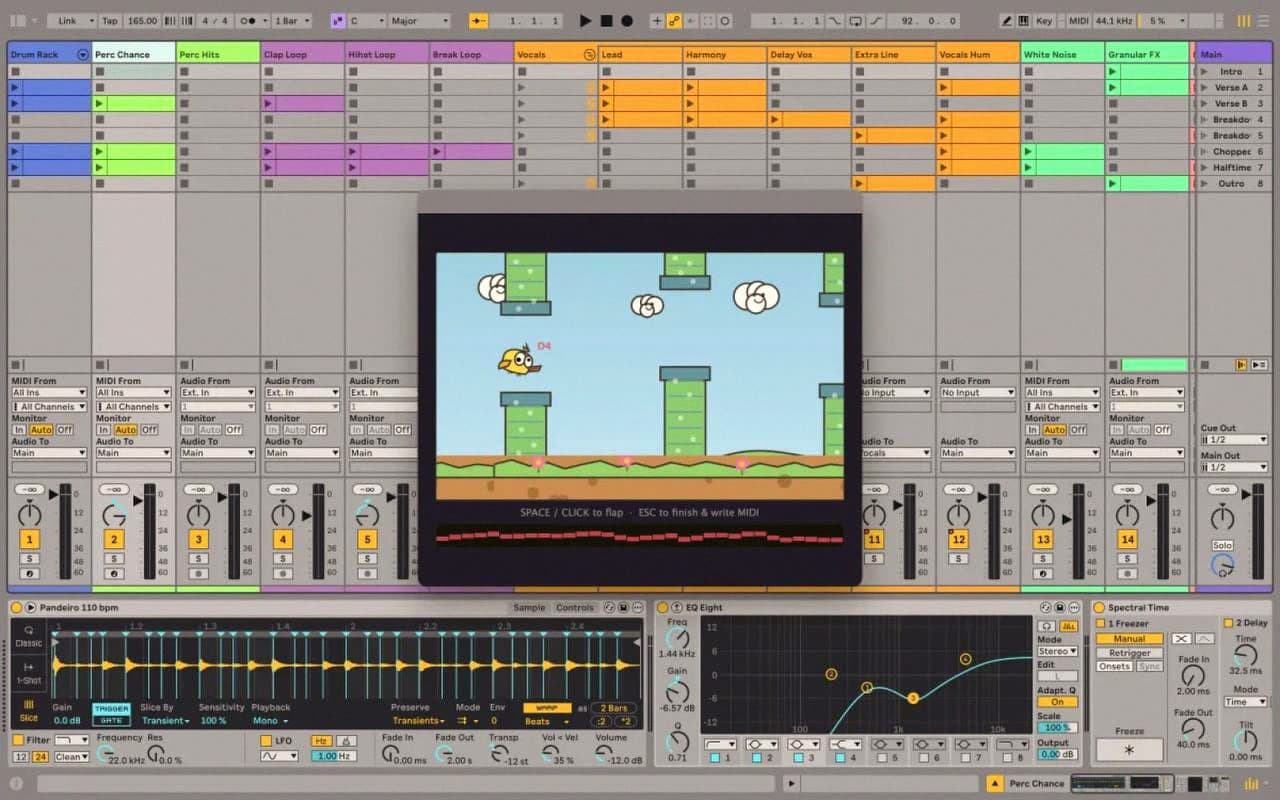
The early examples are the tell. There is BBenCut, a breakbeat slicer built on Nick Collins' library, the kind of chopping tool jungle and breaks producers have rigged by hand for two decades. There is an image-to-MIDI converter, a PaulStretch implementation for Live via olilarkin's port of the algorithm, an arrangement tool that lays out song structure with locators, and a clip-renaming utility for anyone who has ever stared at fourteen clips called "Audio 3." Someone even built a Flappy Bird game where the gameplay collects a melody. The range is the point: this is not a fixed feature set, it is a playground.
Under the hood it pulls in NPM packages and Node.js APIs, so a web developer's existing toolkit transfers directly. You write in any editor, VS Code included, and the extension talks to your live Set.
What are the limits right now?
This is a beta, and Ableton drew the fences clearly. Extensions cannot touch hardware controls, tuning systems, or Max for Live integration, and they cannot run programmatically at startup. So this is not yet a route to custom controller mappings or background automation. It is a way to act on a Set on demand, from the menu, when you ask it to. That is a deliberate, narrow first step rather than a full plugin platform.
The answer to "why can't Live just do that" used to be a wait. Now it can be a script you write tonight.
Who is this really for?
You need Live 12 Suite Beta, version 12.4.5 or later, plus the free SDK and Node.js. So it is gated to Suite users, and it asks you to be comfortable in a code editor. That is a real filter. But the people who run underground rooms and labels have always included a quiet population of tinkerers: the ones who script their own export chains, who built Max patches before there was Max for Live. Those are the people who will turn this into shared tools the rest of the scene downloads. The documentation lives on GitHub, which means the good extensions will travel fast.