Why can't the brain keep up with a festival?
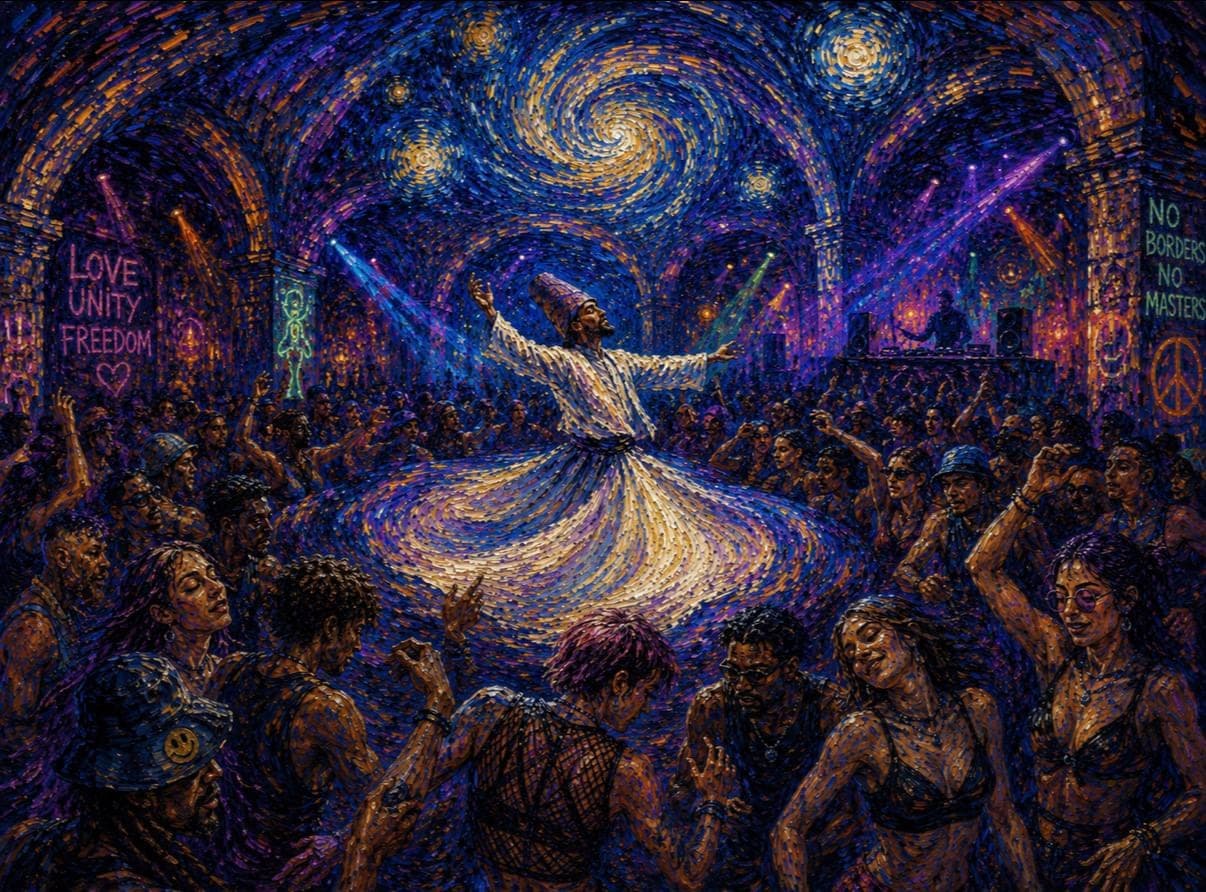
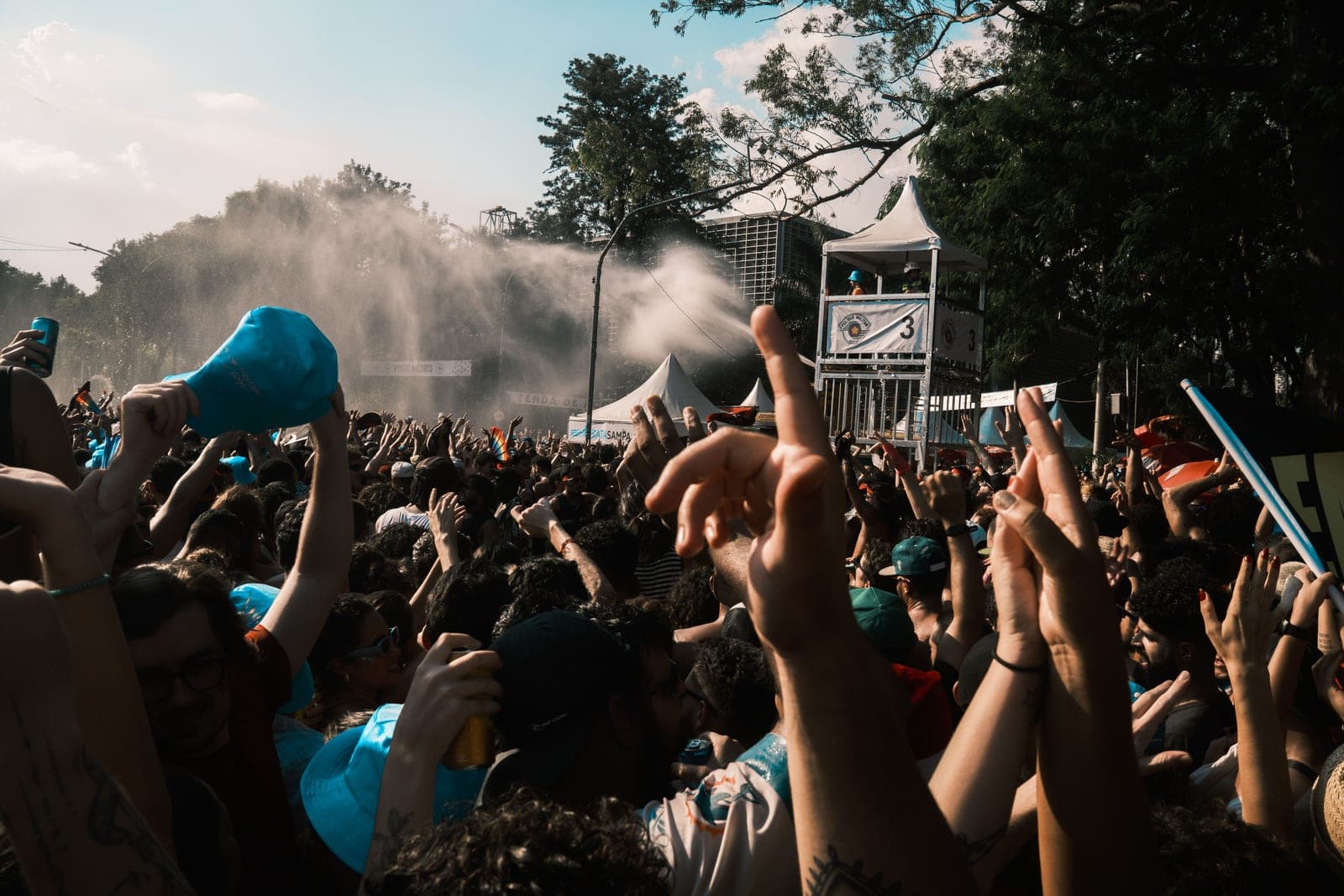
At any moment on a festival field, layers of sub-bass, a wall of shifting light and tens of thousands of moving bodies compete for the same narrow channel: conscious attention. Neuroscientists have long described a staggering gap between what the senses take in and what the mind can actually track. The classic estimate, popularized by science writer Tor Norretranders and traced to physiologist Manfred Zimmermann's work on sensory throughput, puts raw sensory input in the millions of bits per second while conscious awareness handles only a sliver of that. A festival pushes every one of those channels at once: strobes, low end felt in the chest, a crowd moving as one organism. The brain cannot analyze all of it in real time, and that failure is not a malfunction. It is the door.
What happens when the analytical brain shuts off?
Psychologist Arne Dietrich's transient hypofrontality theory, published in Consciousness and Cognition in 2003, supplies the mechanism. When sensory and motor systems demand more metabolic energy than the brain can supply everywhere at once, the first system to go offline is the prefrontal cortex, the region responsible for self-monitoring, planning and second-guessing. Dietrich built the theory to explain runner's high and deep meditation, but the same math applies on a dancefloor: hours of continuous bass, movement and crowd feedback are exactly the sustained sensory-motor load that starves the analytical brain of the resources it needs to keep narrating. The result is not blankness. It is flow.
The dancefloor is one of the only rooms built to overwhelm the very brain that spends the rest of the week trying to optimize it.
Why does losing control feel like awe instead of panic?
UC Berkeley psychologist Dacher Keltner has spent two decades mapping what he calls the science of awe. Across a study of 26 countries, his lab found eight universal triggers, and collective effervescence, the synchronized euphoria of moving, singing or dancing together in a crowd, was one of them. Keltner's research shows awe quiets the brain's default mode network, the self-referential circuitry that narrates who we are and how we are doing, while engaging the vagus nerve. That is the difference between overload as a threat and overload as transcendence: the same sensory flood that would read as an emergency alone in a quiet room reads as communion inside a crowd that is feeling it too.
Why does your job title disappear on the dancefloor?
The mechanism above explains what happens inside the brain, but psychologists have also documented what happens to identity itself in a crowd, and it goes further than losing self-monitoring. Sociologist Gustave Le Bon argued as early as 1895 that a crowd dissolves the individual into a collective mind. A century later, psychologists Stephen Reicher, Russell Spears and Tom Postmes revised that idea into what they called the social identity model of deindividuation: anonymity and immersion in a crowd do not erase the self, they shift which self is active, from the personal identity that tracks a job, a salary and a reputation among people who know your parents, to a shared social identity defined by the group itself. On a festival field, that shared identity is everyone else moving to the same bassline. The people around you do not know your job or your surname, and for a few hours neither does the part of your brain that usually keeps score of it. What takes its place is not a void, it is the crowd itself, worn as a temporary self.
Why do we keep chasing that feeling in an optimize-everything world?
British psychologist David Lewis coined the term Information Fatigue Syndrome after a 1996 Reuters-commissioned study of business managers overwhelmed by data, a diagnosis that reads today like daily life: dashboards, notifications, a culture that treats every hour as something to track and improve. A festival is the rare environment built to do the opposite. It does not ask the brain to optimize anything. It asks it to give up trying, and the nervous system experiences that surrender as relief precisely because it almost never gets the chance. That is the real reason the feeling is so hard to describe afterward and so easy to want again: for one night, the part of the brain that keeps score was finally, mercifully, off duty.