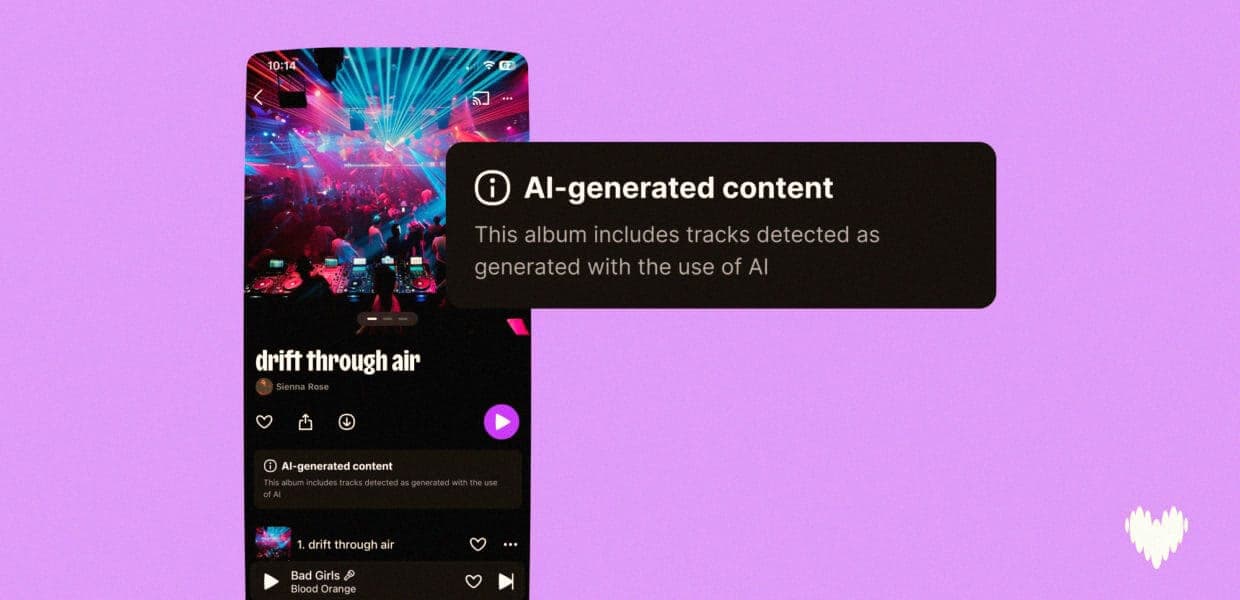
What did Deezer actually launch?
On 11 June, the French streaming service opened a free, public web tool that scans your playlists for fully AI-generated music. You pick one of 20 supported platforms, including Spotify, Apple Music, SoundCloud and YouTube Music, grant access to a playlist, and the detector reports which tracks it reads as synthetic. It runs in 27 languages and, per Deezer, lands above 99% accuracy by spotting the tell-tale artefacts that generative software bakes into a recording.
Deezer has been tagging AI music in-house for about eighteen months. Opening the detector to anyone, on any service, is the company planting a flag.
"No other company has followed our lead yet, so we decided to make it possible for everyone to check if their playlists include synthetic music, no matter which streaming platform they use." Alexis Lanternier, Deezer CEO
How big is the flood, really?
The numbers are the story. Deezer says AI-generated tracks are now 44% of everything uploaded to its platform on a given day, on the order of 75,000 synthetic files out of more than two million uploads a month. Those tracks still account for only 1 to 3% of what people actually play, and Deezer says it has demonetised up to 85% of AI-music streams as fraudulent, the fingerprint of stream-farming rather than real listeners.
The demand-side numbers cut just as deep. Of users arriving from rival services, 43% already had AI tracks in their playlists without knowing it, and 80% said they want synthetic music labelled.
Why should a house producer care?
Because you upload into the same pipes. Every fake ambient loop and AI "deep house" filler competes for the same playlist slots, the same algorithmic surfacing, the same royalty pool you do. A detector plus hard disclosure figures hands working producers and labels something they did not have last week: a way to point at the problem with evidence, and a public standard that the rest of the industry now has to answer.