What did the Top 100 Festivals poll actually say?
On 2 July, Tomorrowland was voted the world's No.1 festival again in DJ Mag's Top 100 Festivals 2026.
The rest of the top 10 reads like a roll call of the world's most powerful festival brands: EDC Las Vegas, UNTOLD, Ultra, Defqon.1, Sunburn, Creamfields, Kappa FuturFestival, Glastonbury and Parookaville. Ultra's international events alone occupied seven positions across the full list.
The result came from a public online vote that ran from 22 April to 17 June.
Why does the ranking look so commercial?
Because this is fundamentally a mobilisation contest, not an objective assessment of musical quality or cultural importance.
The poll rewards festivals capable of convincing enormous international audiences to vote. That naturally favours brands with global recognition, loyal online communities, major advertising budgets and highly developed marketing machines.
It does not necessarily tell us which festivals are taking the greatest musical risks, strengthening local scenes or exerting the deepest influence on underground culture. It tells us which names command the largest and most active public followings.
Kappa FuturFestival, ranked at No.8, remains one of the clearest examples near the top of a large-scale festival rooted heavily in house and techno culture.
Is Tomorrowland making more room for house music?
Tomorrowland may be best known for maximalist EDM spectacle, but its programming is broader than the main stage suggests.
In 2026, the Crystal Garden stage will offer a more focused house music programme featuring DJ Tennis, Shimza, Manda Moor b2b Sirus Hood, Michael Bibi and Franky Rizardo. Their inclusion gives underground and contemporary house music a more visible position within one of the world's most commercially powerful festivals.
It does not suddenly turn Tomorrowland into an underground festival. But it does show the brand recognising the demand for house music that feels closer to the club and the dance floor than to the stadium.
What makes the Crystal Garden stage different?
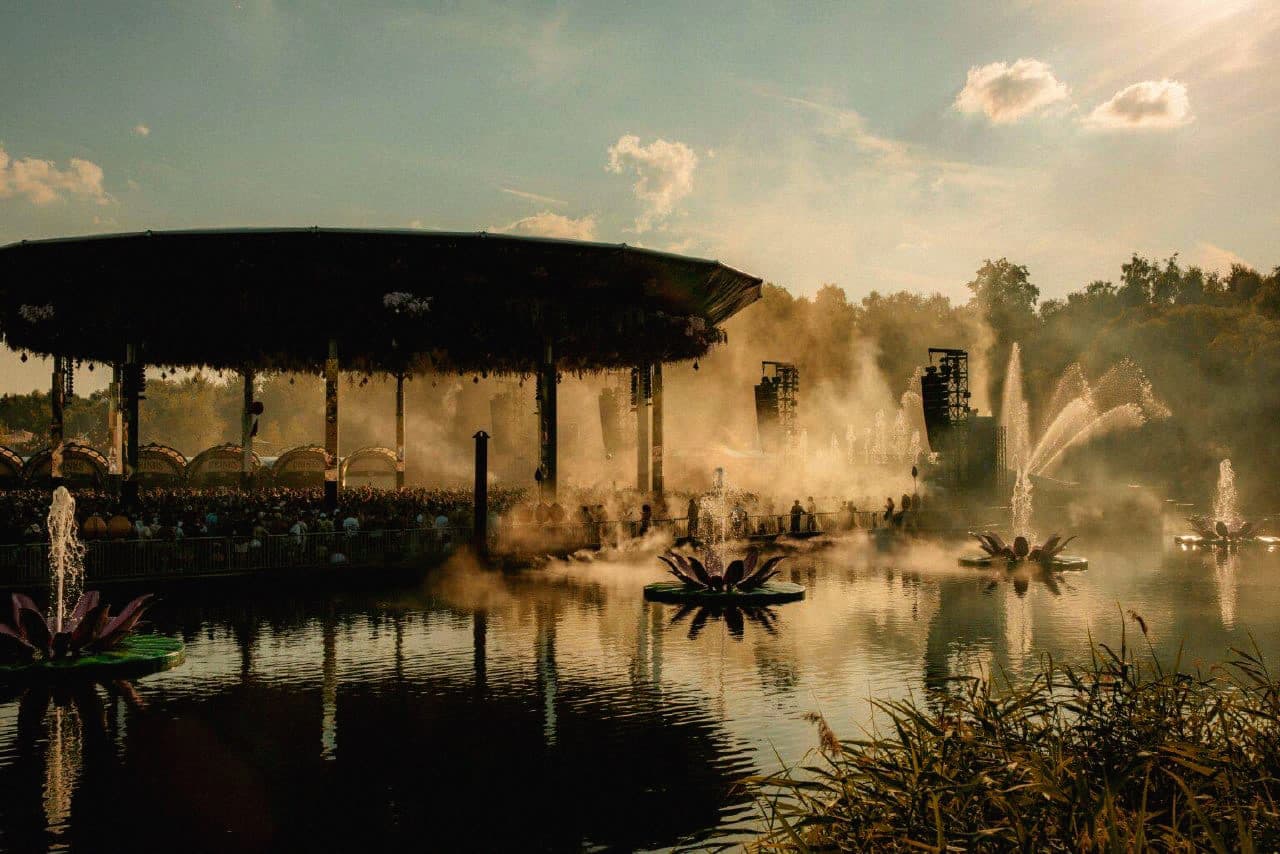
Crystal Garden is built directly on floating barges over the lake at De Schorre in Boom, Belgium.
The production combines steaming water jets, complex laser installations and enormous synchronised fountains that move with the music. Previous editions have featured lush floral structures suspended above the crowd, while scented mist designed to smell like fresh flowers has helped create an enchanted, almost swamp-like atmosphere.
It is still unmistakably Tomorrowland: highly theatrical, meticulously designed and built for visual impact. But with a house-led lineup, the stage could also become one of the festival's most interesting meeting points between immersive spectacle and genuine dance-floor culture.
What does Tomorrowland's No.1 ranking really mean?
It confirms that Tomorrowland remains almost unmatched as a global festival brand.
Its fans are organised, emotionally invested and willing to vote. Its visual universe is instantly recognisable, its international reach is enormous, and its production remains on a scale few festivals can replicate.
That does not make the ranking meaningless. It simply means it should be read accurately.
DJ Mag's poll measures public enthusiasm and fanbase power. It is not a definitive map of artistic relevance, underground credibility or cultural influence. Tomorrowland winning again proves the strength of its global community, while its increased attention to house music suggests the festival knows that spectacle alone is no longer enough.