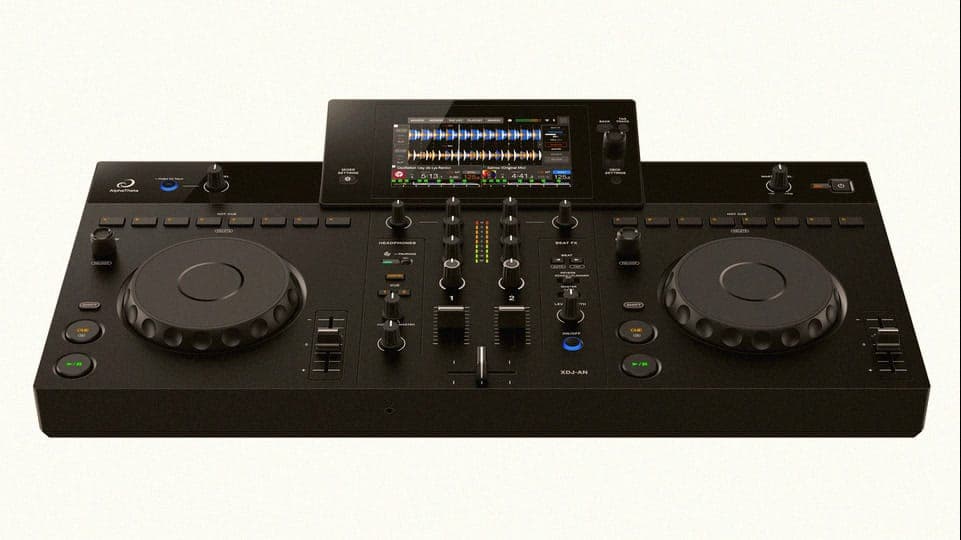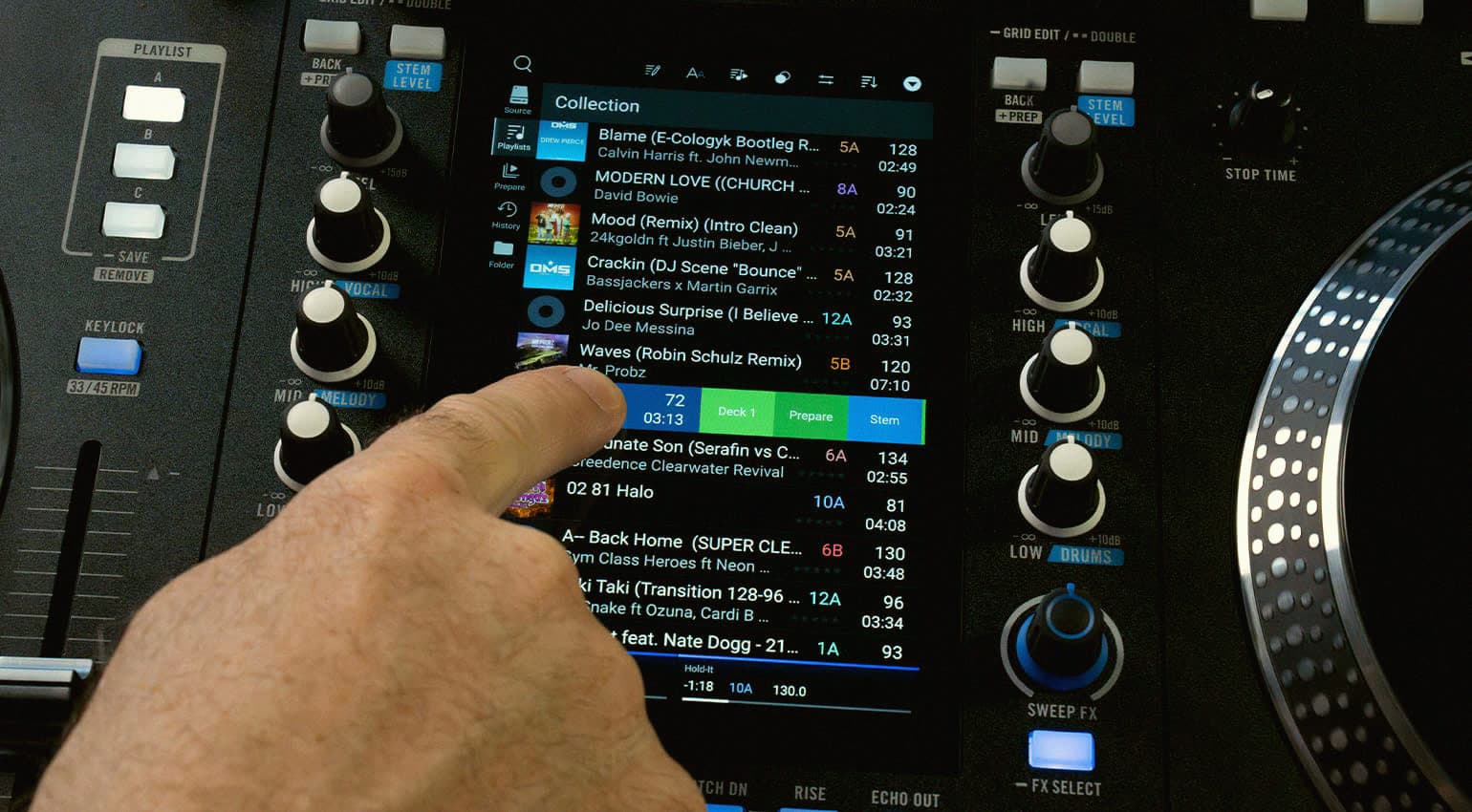
For years the deal with stems was simple and annoying: you wanted to pull a track apart live, you brought a laptop. Serato did it, rekordbox did it, Traktor did it, and all three still leaned on a computer to do the maths. On 13 May 2026, Engine DJ 5.0 broke that rule. The Rane System One can now render four-part stems on the unit itself, splitting vocals, drums, bass and melody with nothing else plugged in. As DJ TechTools put it bluntly, no other standalone DJ system supports stems at all. This is the first.
How does on-board stem rendering work?
You point the System One at a track and it processes the separation in the background while you keep mixing. It is not instant: figure roughly three to three and a half minutes to render a four-minute track. But it is a one-time cost. Once a track is split, the stems are written permanently to your USB or SD card, so the next time you load it they are there immediately. You can also pre-render at home through Engine DJ Desktop and walk in with everything already done, which is what most working DJs will do for a planned set and leave the on-the-fly rendering for the curveball request.
What is the catch?
Two, and they are real. First, storage. Permanent stem files are not small, and DJ TechTools warns that rendering thousands of tracks can add hundreds of gigabytes to your drive. If you carry a deep library, budget for a bigger, faster card. Second, this is your own music only. The on-board separation does not work on streamed tracks, so the Beatport and Tidal streaming crowd is out of luck here. Stems are a reward for owning your files.
The pitch is for the gig with no room for a laptop. As The FADER framed it, if you have ever hauled a computer to a bar set or a warehouse where there was barely space for a drink, you get why this matters.
What else landed in 5.0, and why it is the bigger story?
The headline is stems, but the quiet win is RGB waveforms going to everyone. The frequency-coloured waveform was a System One exclusive; 5.0 pushes it across Engine DJ hardware going back to the SC5000 from 2017. Add a faster database, hardware-set star ratings, an import assistant for Rekordbox and Serato libraries, and new long-form reverb effects, and the message is that a nine-year-old deck gets meaningfully better for free. That is the part the CDJ world should read closely. While the dominant standalone players have let their mid-tier hardware sit largely untouched for years, the challenger is shipping real upgrades to gear people already own.