FM synthesis is the sound a lot of producers love and almost nobody wants to program. The Yamaha DX7 defined the glassy electric pianos, the metallic bells and the hard digital basses that ran through late-80s house and pop, then it scared everyone off with a menu-diving interface that made building a patch feel like filing taxes. M-VAVE, the Chinese maker that turned heads about a year ago with the sub-100-euro SMK-37 Pro keyboard, just previewed a box that goes at exactly that problem: the FM-1, a battery-powered desktop FM polysynth that Synth Anatomy detailed on June 14, 2026.
What is actually inside the FM-1?
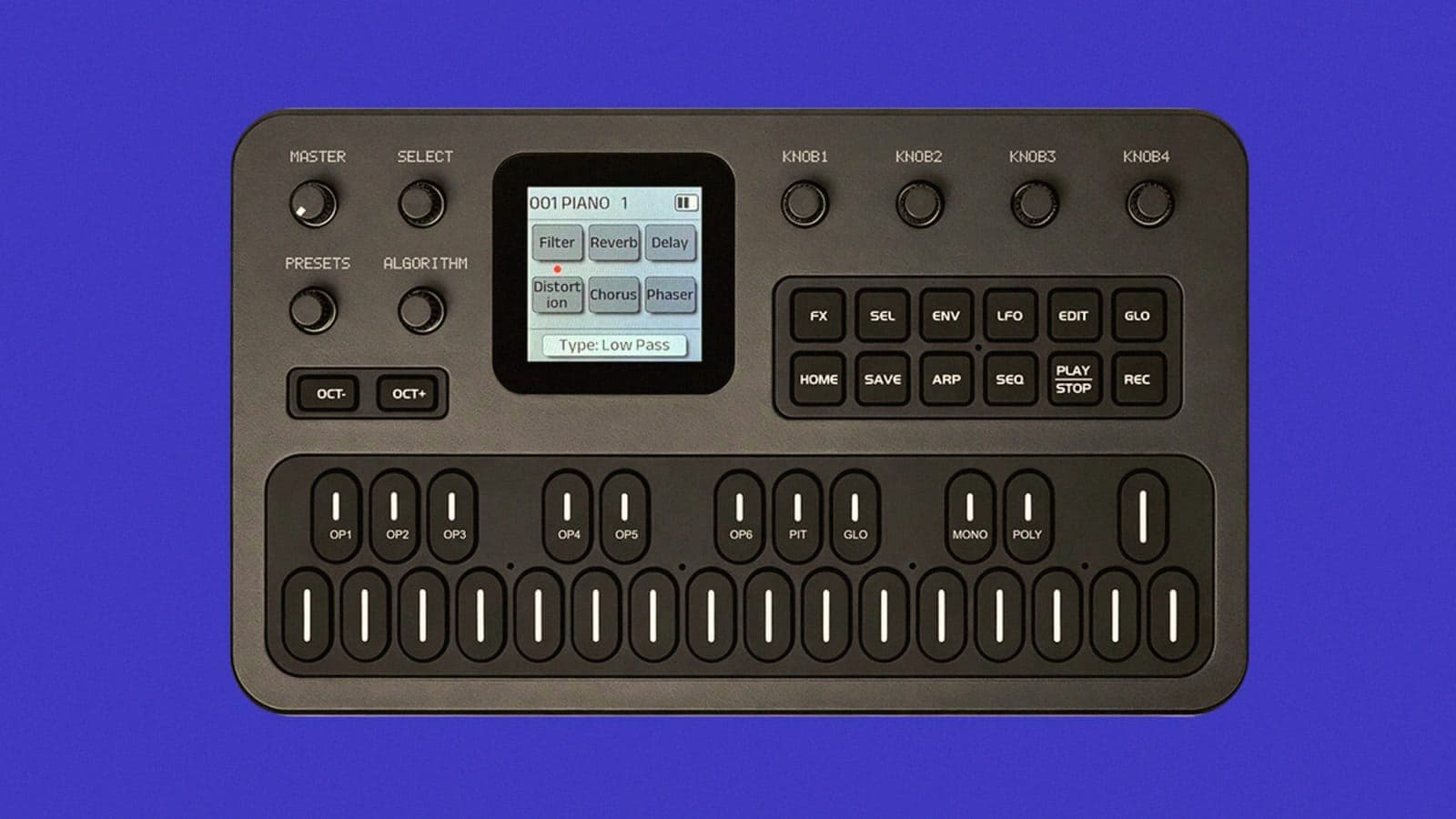
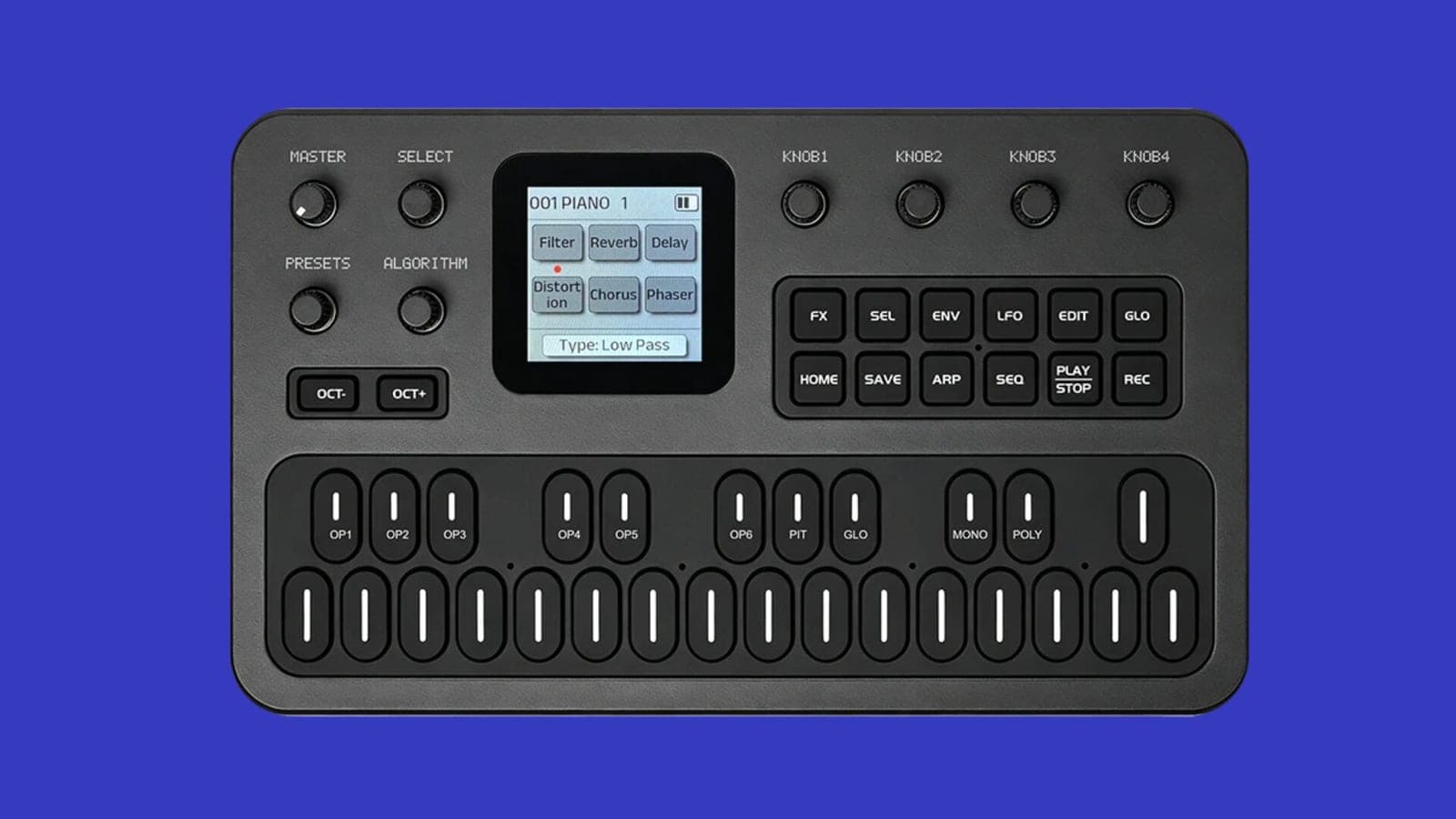
Under the hood it is a six-operator sine-wave FM engine, the classic DX7 layout, with 32 algorithms that decide how those operators wire up as carriers or modulators, and an independent ADSR envelope on each one. The polyphony count was not specified in the preview. The part that matters for anyone with a history in this sound: it imports SYSEX banks straight from the Yamaha DX7, so decades of classic patches load right in. M-VAVE's own product listing pairs that engine with 128 presets, a 7-mode arpeggiator and a 16-step sequencer, and there are six tweakable effects on top: filter, reverb, delay, distortion, chorus and phaser.
Why does the form factor change the pitch?
The SMK-37 Pro buried a DX7 engine inside a MIDI keyboard. The FM-1 is the first time M-VAVE has built a standalone desktop instrument around the idea, and the front panel is where the democratization happens. Eight knobs, 14 menu buttons and 27 silicone keys sit under a color TFT screen that draws the active algorithm in real time, so you can see which operator is feeding which instead of decoding a number on a two-line LCD. That visual is the single biggest reason FM has always felt harder than it is.
A 2000mAh battery, around 12 hours of playtime, a built-in speaker that mutes when you plug in headphones, and a box small enough to live on a tray table.
How does it connect?
USB-C handles power and MIDI, there is Bluetooth BLE MIDI for a cable-free link, and a 3.5mm TRS MIDI input for hardware. It is class-compliant, so it shows up without drivers on macOS, Windows, iOS and Android, and the built-in speaker auto-mutes on headphone detection. It ships in several colors. Price is still to be announced, with M-VAVE saying it is available soon.