Fifteen years ago the idea was almost contrarian: get people dancing in daylight, in a space dressed to feel like somewhere else, to music that aimed for feeling rather than force. In 2026 that idea is the house style of an entire lane, and the people who minted it are still running it.
Where did All Day I Dream actually come from?
Lee Burridge and Matthew Dekay launched All Day I Dream on a Williamsburg rooftop in late summer 2011. The seed was Burridge's 2008 Resident Advisor mix "All Day I Dream of Her," and the motive was a reaction: after years DJing through Asia, Burridge wanted to move away from the dark-techno rooms that defined the US scene at the time and build something that prioritized community over the booth.
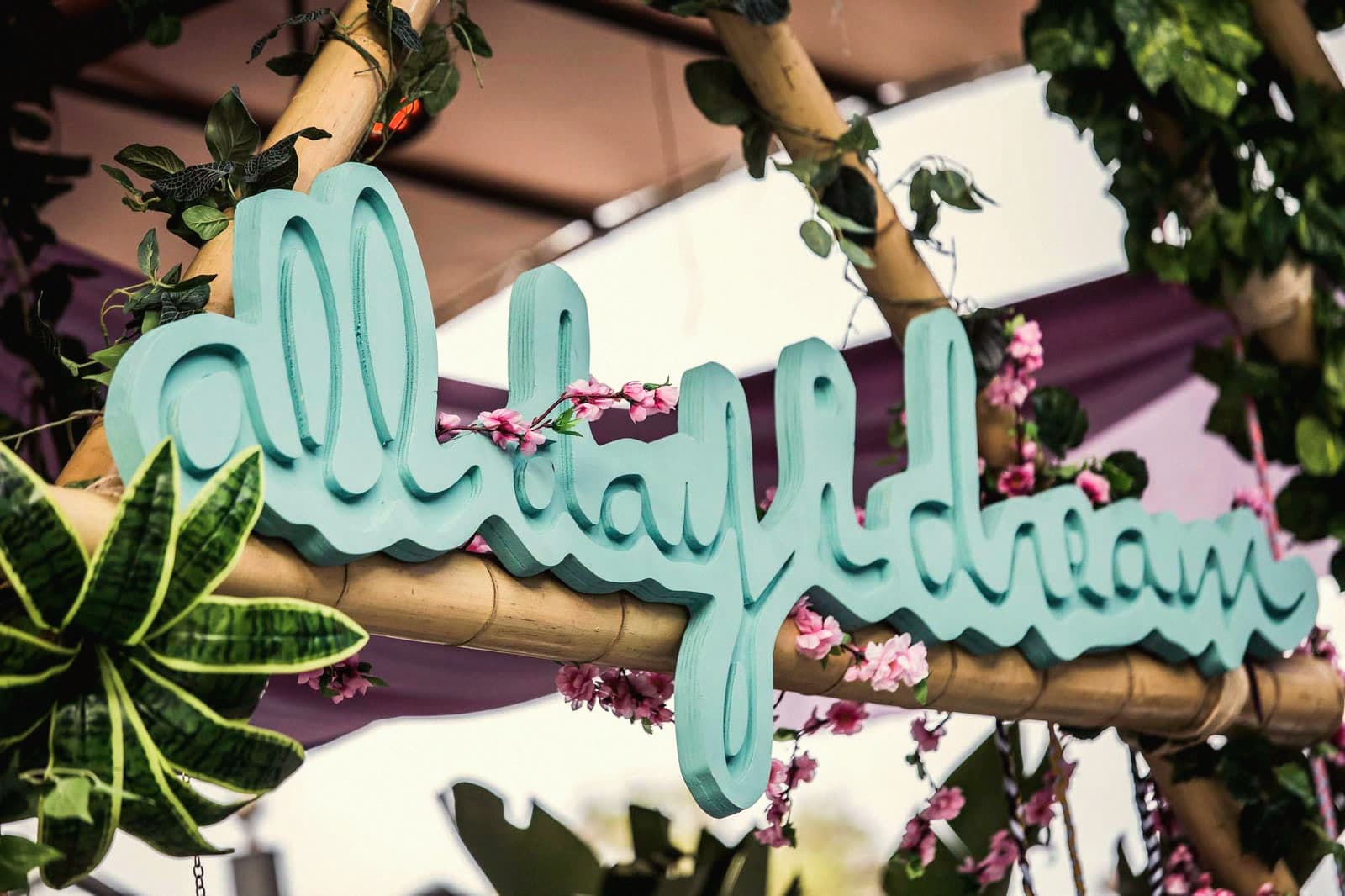
The sound settled into the deeper, more emotional and melancholic end of house, what the wider scene now calls organic and melodic house. But the differentiator was never only sonic. It was the room: outdoor, daytime, dressed in flowing fabrics, fairy lights and lanterns, aesthetics Burridge carried back from Asia and from Burning Man, all engineered so people could actually connect.
What does the 15-year footprint look like in 2026?
The brand now travels as a circuit. The 2026 run takes in London at Studio 338 (4 April), an Ibiza season from 25 April, Mexico City, San Francisco's Golden Gate Park on 6 June (its tenth annual stop in that park), Barcelona, and Brooklyn's Industry City on 20 June, a short walk in spirit from where it started.
On the island it operates from garden settings at Las Dalias and Akasha, giving it two Ibiza homes rather than a single residency. That breadth, multiple continents under one consistent look and curatorial signature, is the part rivals study.
The replicable unit was never a track. It was the rooftop, the fabrics and the daytime promise, bottled and shipped city to city.
Why does everyone in organic house copy it?
Because it solved the live economy for a sound that does not fill a megaclub on raw BPM. A repeatable aesthetic, a hand-picked roster, free or low-friction entry to build the crowd, and a label feeding the parties: that loop is now the default organic-house promoter playbook, from boutique day parties to festival side-stages. ADID did not invent emotional house, but it built the franchise mechanics that let emotional house tour.