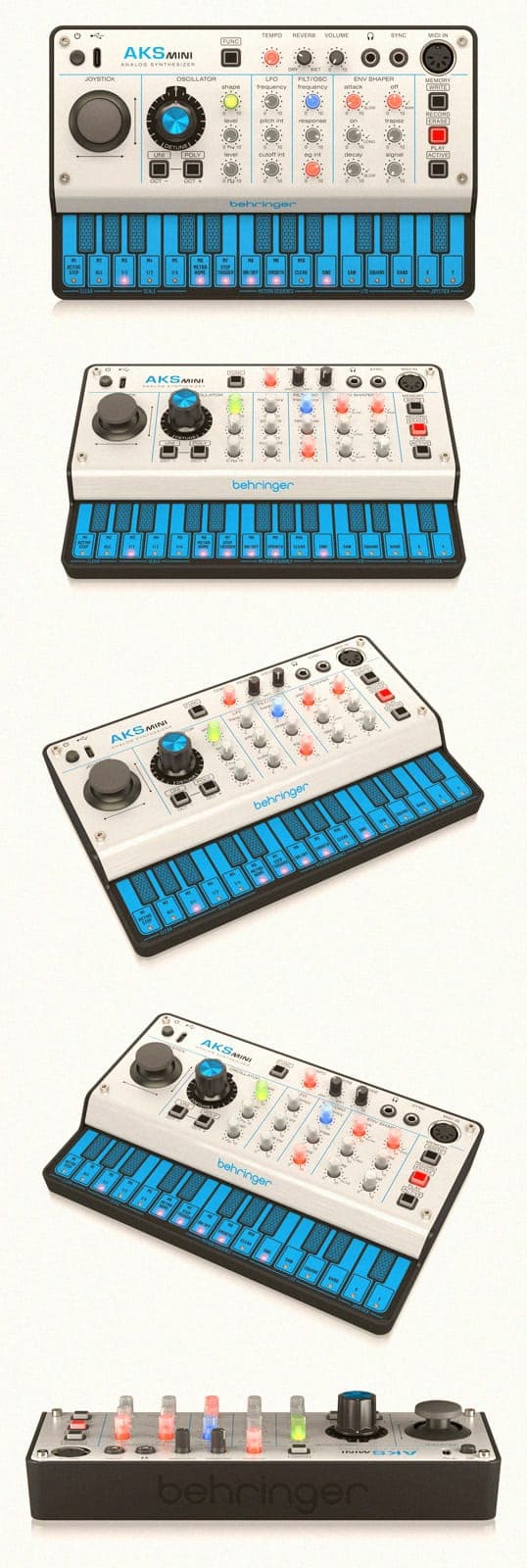
What is the D Mini, and what does it clone?
Behringer has put its D Mini up for pre-order in the EU at 99 euros, and the pitch is simple: the sound of a Moog Minimoog Model D, the synth that has anchored low end in dance music since the 1970s, in a battery-friendly box you can hold in one hand. Three oscillators, five waveforms each, a ladder low-pass filter with resonance, white and pink noise. The bones are pure Model D.
What the D Mini adds is the part the original never had. There is a 16-step motion sequencer with eight memory slots that records knob moves, a built-in scaler, and four voice modes: three-voice paraphonic, unison, ring modulator and more. Every knob speaks MIDI for editing and patch storage. It is a Minimoog that sequences itself and talks to your DAW.
Where does it cut corners?
This is 99 euros, so something gives. The D Mini ships with a single ADS envelope instead of the Minimoog's two, and you lose the dedicated contour for the filter that players lean on. The keyboard is a 27-key touch strip that doubles as a menu, not a playable bed. Power is USB-C off a phone, power bank or laptop. None of that is a dealbreaker at this price, but it is the difference between a pocket noisemaker and a stage instrument.
Why does a 99 euro Moog clone matter for house and techno?
The Minimoog bassline is load-bearing. It sits under decades of Chicago house, Detroit techno and everything that grew out of them. Until recently that sound meant a vintage unit at collector prices or a 1,000-plus euro reissue. A 99 euro version with a sequencer drops the floor on entry, and that is the whole Behringer playbook: clone the classics, undercut everyone, argue about it later. Producers who would never spend rent money on a real Model D can now put that exact growl in a track this weekend.