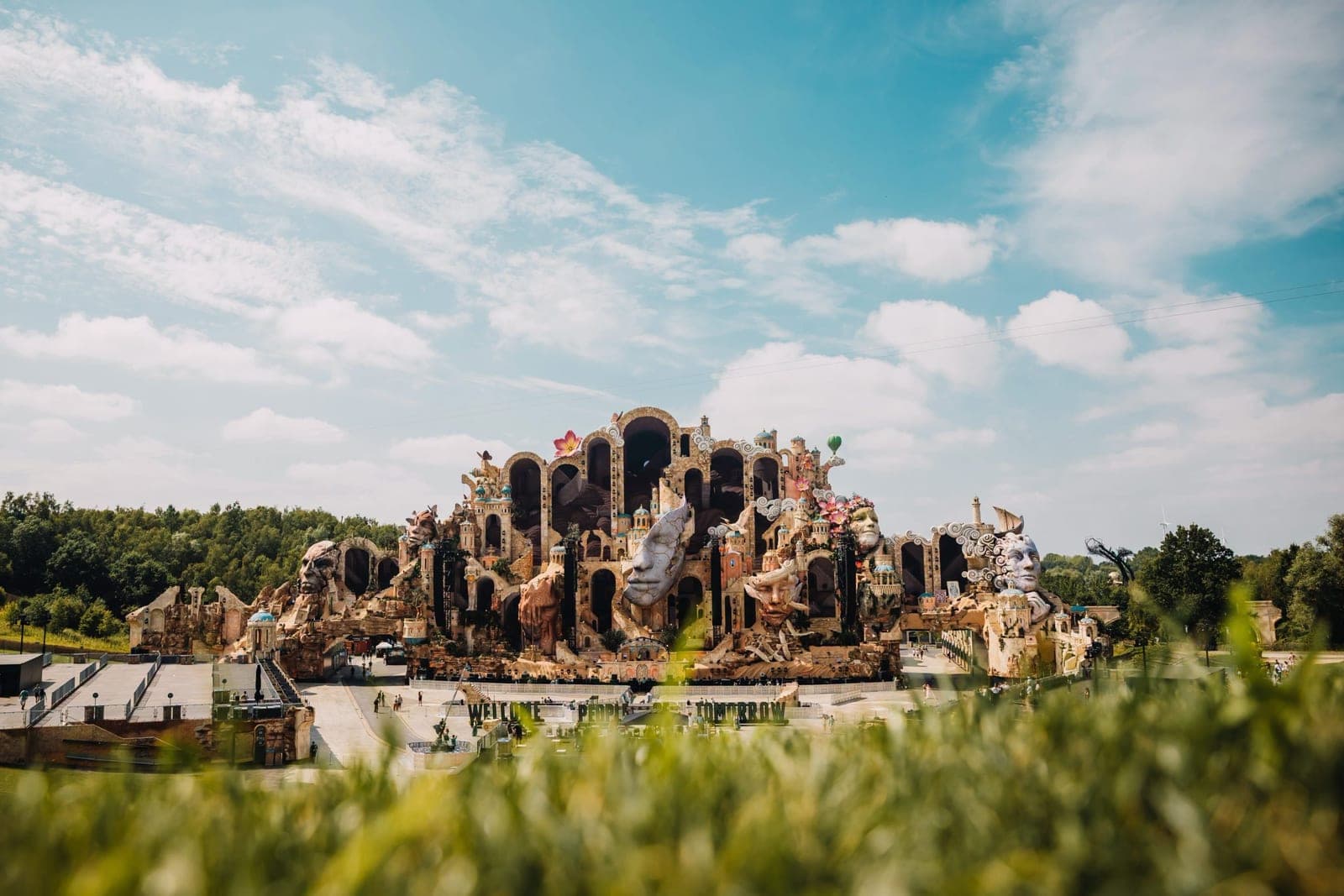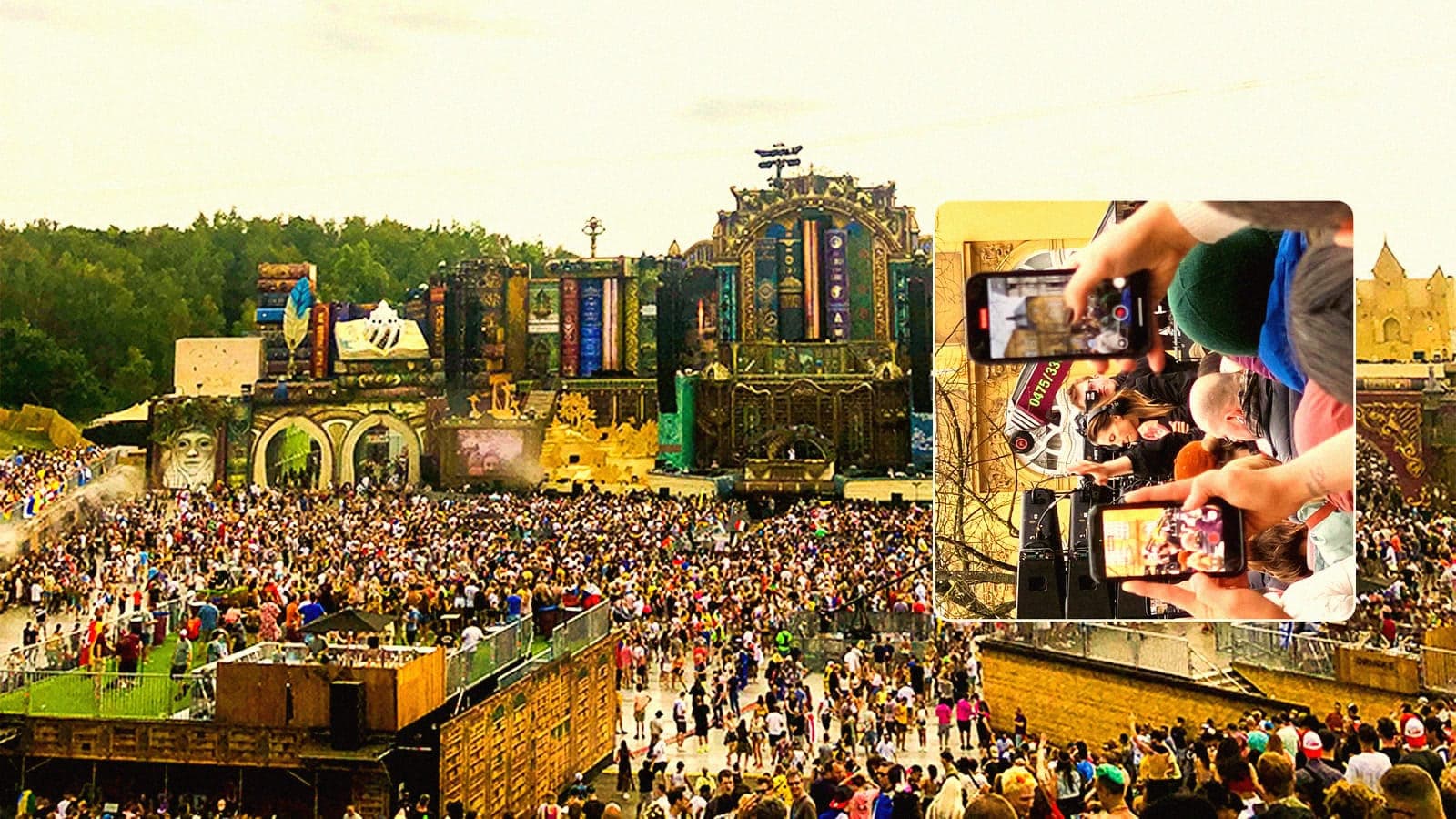
Tomorrowland does not usually let techno anywhere near its Mainstage closing slot. That stage is EDM's home turf, built for pyro drops and festival-trap choruses, the kind of booking that goes to a Martin Garrix or a Swedish House Mafia. On July 19, it went to Charlotte de Witte, hard techno's most consistent headliner, playing acid lines and psy-trance turns to a crowd that came for exactly the opposite sound.
She was never supposed to be there that night. Per DJ Mag, her name surfaced only in the Tomorrowland Daily, the paper handed out each morning across the festival site, as the mystery act filling the Weekend 1 closing slot. No lineup poster, no rollout, just a name that made the techno half of the internet do a double take: de Witte, on the Mainstage, closing.
Why does a techno headliner closing this stage matter?
Because the Mainstage is not neutral ground. It is the single most EDM-coded booking in the world, the stage that made Tomorrowland synonymous with the genre it is now hosting an insurgency against. De Witte playing it once would be notable. Doing it twice, in two different eras of her own career, is a pattern.
The first time, on July 23, 2011, she wasn't even allowed to be herself. At 19, having just won a Studio Brussel DJ contest, she opened that Mainstage under the alias Raving George, a male name she chose specifically because female DJs booked on stages that size were close to unheard of and she didn't want the booking read as a gimmick. "That set in 2011 literally changed my life," she has said of it, per VRT, "afterward, opportunities like Pukkelpop and I Love Techno came my way." She kept the alias through her early Mainstage returns, dropping it publicly only in 2015 once she'd decided she no longer needed to hide behind it.
By 2022 the arc had flipped entirely: she closed that same Mainstage as the first woman ever to do so as an openly techno artist, no alias, no cover. This year's Weekend 1 slot, per DJ Mag's report of her own reaction, hit her as proof of how far the distance actually runs. "The whole journey has been such a rollercoaster," she said, "I think that's exactly what would amaze younger me most."
What did she actually play on EDM's biggest stage?
Not a compromise set. Per We Rave You's recap, de Witte ran a set that pushed straight into hard techno and closed by leaning into psy-trance, including selections alongside Vini Vici and Pan-Pot, and the live premiere of 'The Resistance,' her new collaboration with Theo Nasa, first aired days earlier at Rock Werchter. She didn't soften the set to fit the room. She made the room fit the set.
"The whole journey has been such a rollercoaster. I think that's exactly what would amaze younger me most."
Is this an isolated booking or a real shift?
One booking doesn't rewrite a festival's identity. Tomorrowland's Mainstage still belongs to EDM most nights of most years, and de Witte remains one of very few techno artists, and Belgian techno artists specifically, ever handed that closing slot at all. But a festival built on big-room drops choosing the genre's hardest, least-compromising headliner to end a weekend, twice, across two different chapters of her own career, is not an accident. It's a festival admitting where some of its most reliable crowd energy now comes from.