House was built on the long night: the warm-up, the peak, the 6am comedown, the afterparty that bled into Sunday. A growing slice of the audience has decided it wants the trance without the toll, and the numbers behind that decision are no longer a curiosity.
What do the numbers actually say?
Eventbrite's own platform data, comparing the first half of 2024 with the first half of 2025, logged coffee-clubbing events up 478% and their attendance up 150%. Sober-curious gatherings rose 92%. The sharpest spike was not the coffee rave at all but the thermal party, the sauna-and-cold-plunge social, with events up 256% and attendance up an eye-watering 1,105%. Regionally it gets stranger still: Houston coffee events up 1,800%, Denver morning parties up 343%, New York thermal events up 900%.
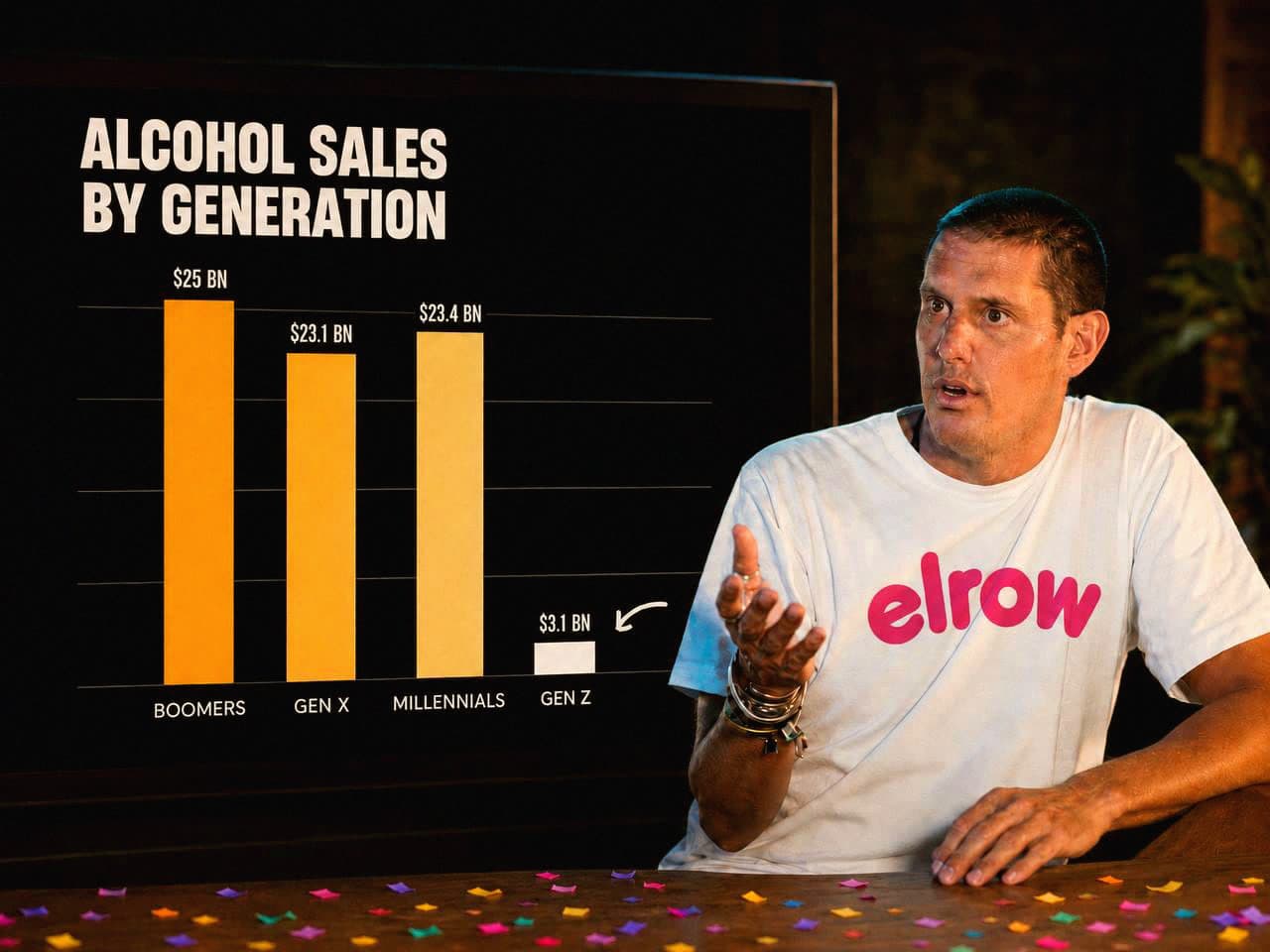
The demand side lines up. Eventbrite cites 61% of Gen Z wanting to drink less for sleep, mental health and fitness, against 41% of all US adults, with one in five US adults actively hunting alcohol-free events. A YouGov read of UK 18 to 24s puts 39% of them fully off alcohol. This is not a fad bolted onto nightlife. It is a generation editing the ritual itself.
Is this still a rave, or something else wearing the costume?
Strip it down and the architecture is familiar. A DJ, a system, a room full of people moving together toward a shared peak. What changes is the chemistry and the clock. The substance is removed and the start time is dragged into daylight: 6am sets, bakery takeovers, dancefloors that empty out in time for work.
Daybreaker is the load-bearing example. Founder Radha Agrawal started it 13 years ago, selling out a 200-capacity coffee rave in the basement of The Coffee Shop in New York. It now runs in more than 60 cities with roughly a million members, green juice instead of a bar, a 'hugging committee' instead of a bouncer. Around it sit collectives like Be You Disco and a global spread of cafe parties, from Couplet Coffee in Los Angeles to Corridor Seven Roasters in Nagpur, that treat the espresso machine as the bar and 5am as a perfectly reasonable door time.
The pitch is not abstinence as punishment. It is the peak, kept, with the wreckage left out.
Why are promoters paying attention now?
Because the economics have flipped. A daytime, dry event recycles a room that would otherwise sit dark before midnight, dodges late-license headaches, and reaches an audience that has quietly stopped showing up for the 2am bottle-service model. Eventbrite's Roseli Ilano, its Head of Community and Trends, frames it as additive, not subtractive: in her words the movement is about choosing more presence and more intention rather than giving something up. Whether or not you buy the wellness gloss, the booking sheets and the venue P&Ls are moving.