What gap is Korg actually closing?
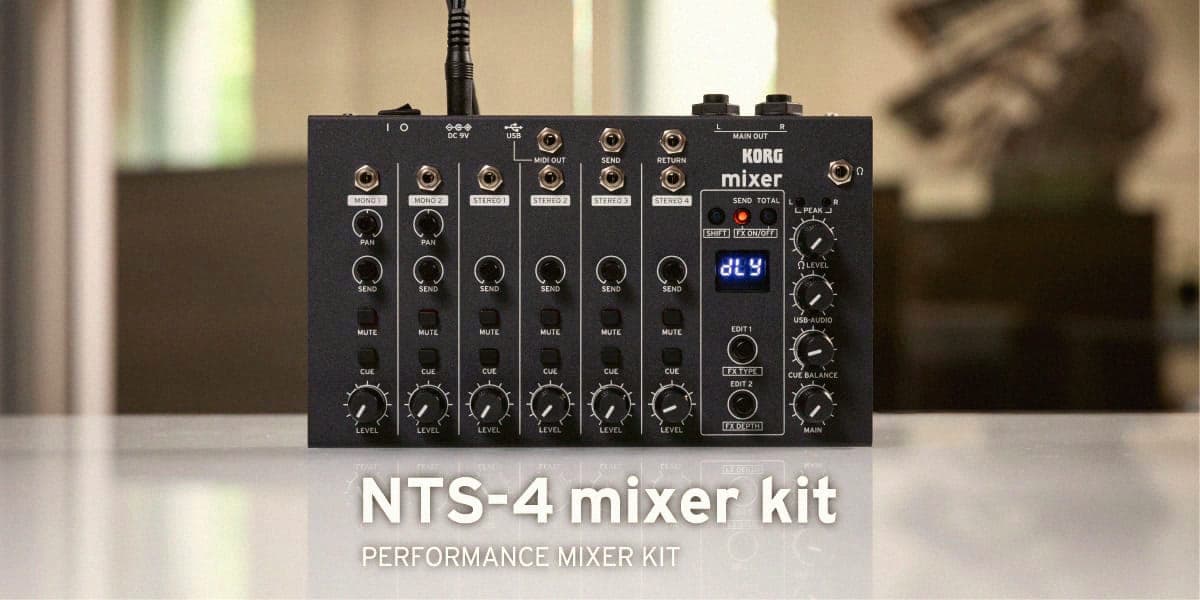
Modular synthesis has spent the last decade migrating out of the studio corner and onto stages, in techno and deep-tech live sets built entirely from Eurorack racks. The problem was never the sound, it was the interface: Eurorack runs at a hotter, unbalanced signal level than the line-level gear in a standard DJ booth or a laptop audio interface, so patching a modular rig into a normal mixer meant extra attenuators, DI boxes, or gear built for one world and awkward in the other. The Korg NTS-4, released July 10, 2026, is a six-channel mixer built to sit on either side of that line by default: four stereo 3.5mm inputs for line-level synths and drum machines, two mono inputs wired to take Eurorack voltage directly, and switchable attenuators on every channel so the same box handles a volca, a laptop, and a modular voice without a patch of external gear in between.
How does the soldering-free kit go together?
The NTS-4 is the fourth release in Korg's Nu:Tekt line, the company's DIY series built around kits that snap and screw together with no soldering iron required, following the same assembly logic as the earlier Nu:Tekt units. Buyers get a six-channel digital mixer with effects on every channel and on the master mix bus, priced at $249 in the US, €219 in the eurozone, £189 in the UK and ¥32,000 in Japan, a build-it-yourself price point well under what a comparable rack mixer with onboard FX would cost fully assembled.
Why does a $249 mixer matter to house and techno?
A performance mixer that natively speaks Eurorack and speaks line level, for the price of a decent pair of headphones, is exactly the kind of gap that's kept modular out of more DJ booths than the music itself ever did.
The barrier to bringing modular gear into a live house or techno set has rarely been taste, it's been plumbing: getting a Eurorack voice to talk cleanly to everything else on the table. A sub-$250 kit that handles both signal worlds and throws in send and master effects removes one of the last practical excuses for keeping a modular rig confined to the studio. Expect it to show up fast in hybrid live setups that mix volcas, modular voices and a laptop, the exact rig a growing slice of the deep-tech and organic house crowd already builds around.