What did the study actually find?
A team led by C.J. Healy at The New School for Social Research, with Johns Hopkins psychedelic researcher Albert Garcia-Romeu, did something most drug science avoids: they followed people into real ceremonies and real raves instead of a lab. Across 2023 they recruited adults who had survived childhood maltreatment and planned, with therapeutic intent, to take a psychedelic, either at a facilitated group ceremony or at an EDM event. Of more than 3,500 who signed up, 85 completed all three surveys: before, two days after, and two months after.
The drugs were what you would expect on a dancefloor or in a circle: psilocybin, ayahuasca, MDMA, LSD. Most people took a moderate dose, almost all had music, the majority danced. Two months on, the numbers moved hard. PTSD and complex-PTSD symptoms fell, trait shame fell, and measures of social and general connectedness rose, with large effect sizes running from d = 0.73 to 1.12. The headline twist for our world: ravers and ceremony-goers improved by the same amount. The dancefloor was not the lesser setting.
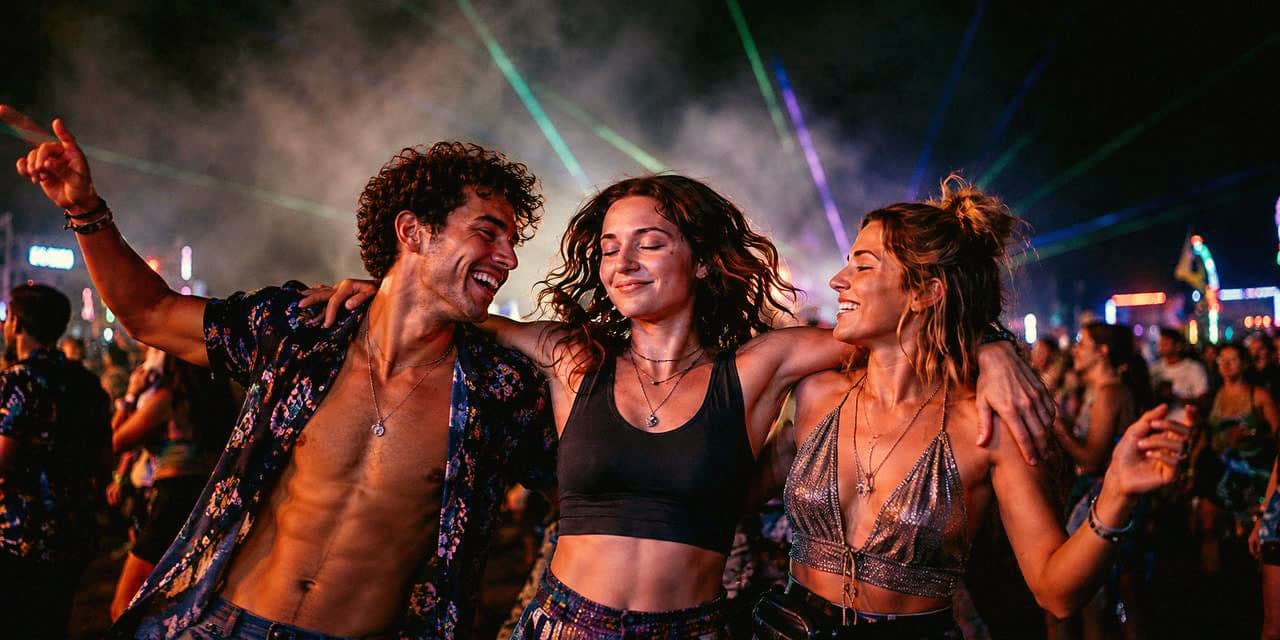
Raves aren’t just escapism. At their best, they can become collective containers for connection, emotional release, and healing.
Why would a dancefloor heal anything?
This is where the paper gets interesting for anyone who has felt a room come together at 5am. When the authors modelled it, drug dose predicted how intense the trip felt, and the intensity of that experience predicted the healing, but dose did not predict the outcome directly. In plain terms, it was not the milligrams. It was the experience: ego dissolution, emotional breakthrough, and above all communitas, the sense of collective bonding the ravers' PLUR ethos has named for decades. The authors argue raves and ceremonies share the same machinery, night, trance-inducing music, a long shared altered state, and a culture of radical acceptance, and that this is part of what does the work. It is a rationale, they write, for group-based psychedelic therapy.