What is actually opening in September?
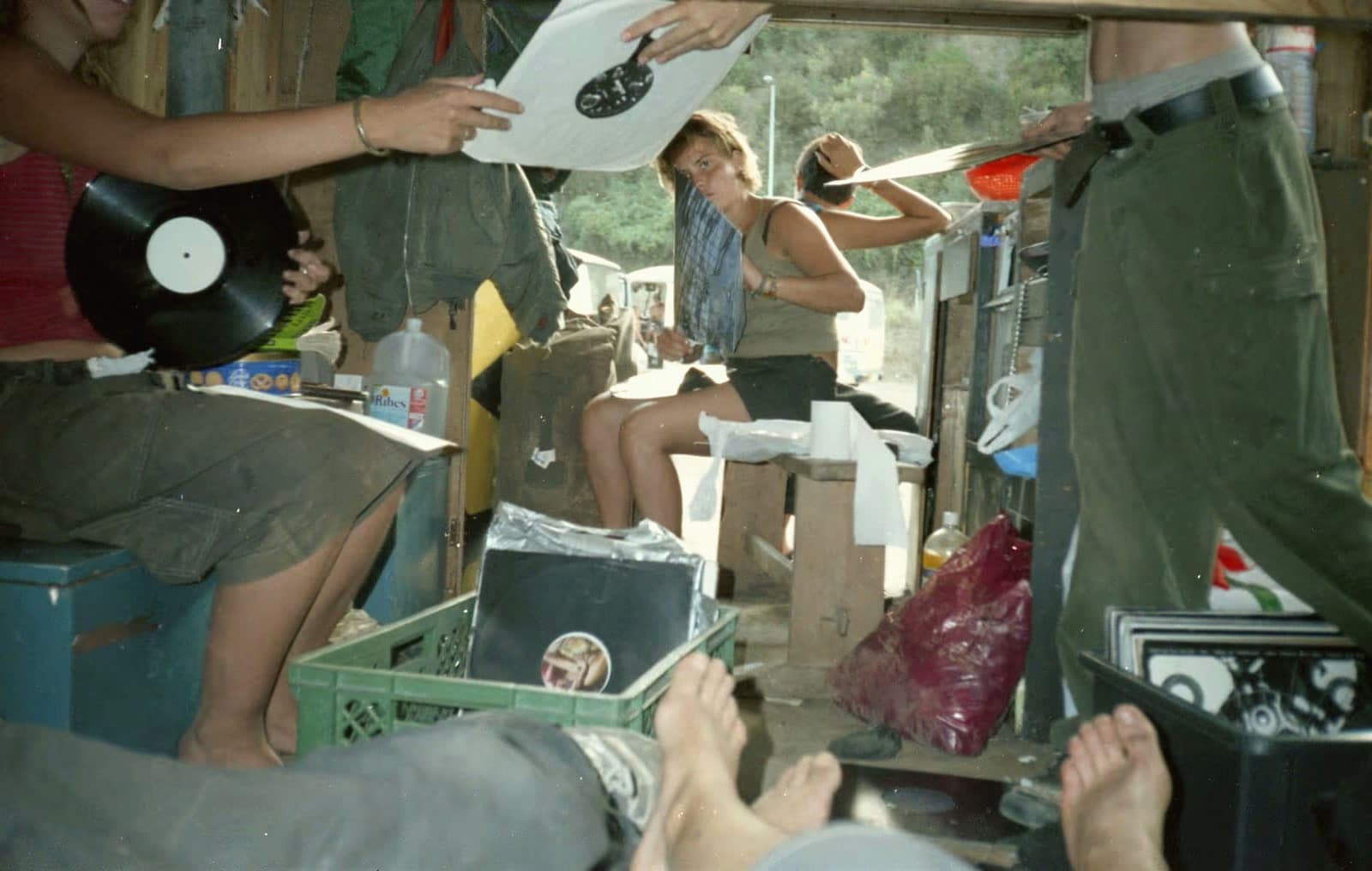
Spiral Tribe is handing its archive to the public. Unmasked Presents has built a four-day exhibition at REinsTate in Silvertown, East London, running 16 to 19 September 2026, with six of the collective's original members in the room shaping it. The promise is a rare look into the archives, the images, the visual language and the countercultural legacy of Britain's most notorious travelling sound system.
The exhibition is free to walk through all week. Around it sits a programme that is not: panel talks, workshops, screenings, interviews and live sessions with members, all ticketed and capped. It follows earlier Spiral Tribe shows in Manchester and France, plus a 2023 Zurich exhibition titled "Music, Magic and Mayhem." This time the week does not end with a plaque. It ends with an SP23 rave at Distillery N17 on 19 September, members back behind the rig alongside Unmasked residents.
Why does Spiral Tribe still matter?
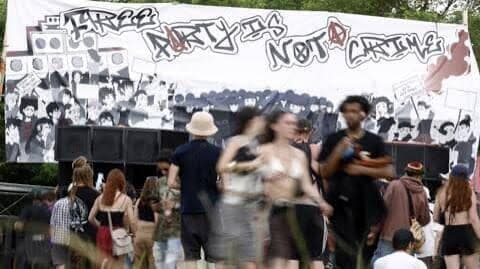
Because they are the reason a clause about "repetitive beats" sits in British law. Spiral Tribe formed in London in 1990 around Mark Harrison, Debbie Griffith and Simone Feeney. In May 1992 they soundtracked Castlemorton Common in Worcestershire, a free festival that swelled into tens of thousands after police blocked travellers from reaching the Avon Free Festival. Thirteen members were arrested and charged with public order offences. They were acquitted in March 1993, after a trial that ran four months and cost the state around 4 million pounds, one of the longest and most expensive of its kind.
They lost the festival, won the trial, and still ended up written into the statute book.
The acquittal did not end the story. The press storm around Castlemorton is widely credited with laying the groundwork for the Criminal Justice and Public Order Act 1994. Half the crew left for Europe soon after, throwing parties in the Netherlands, Germany and Austria, basing themselves in Berlin at Kunsthaus Tacheles and releasing records on techno labels including Labworks and Network 23. The collective reformed as SP23 in 2011 and never really stopped.
What does an archive say about the scene right now?
It says the underground is being read back to itself at exactly the moment it is under pressure. Across the UK and Europe clubs are closing and licences are tightening, and here is the state's old enemy, framed and lit, on a gallery wall. There is a real risk of heritage-washing a movement that was built on trespass and refusal. What keeps this honest is who is telling it: the people who lived it, putting the receipts up themselves, and closing the week on a dancefloor rather than a guided tour. For a generation fighting today's closures, the lesson in the archive is simple. The repetitive beats won.