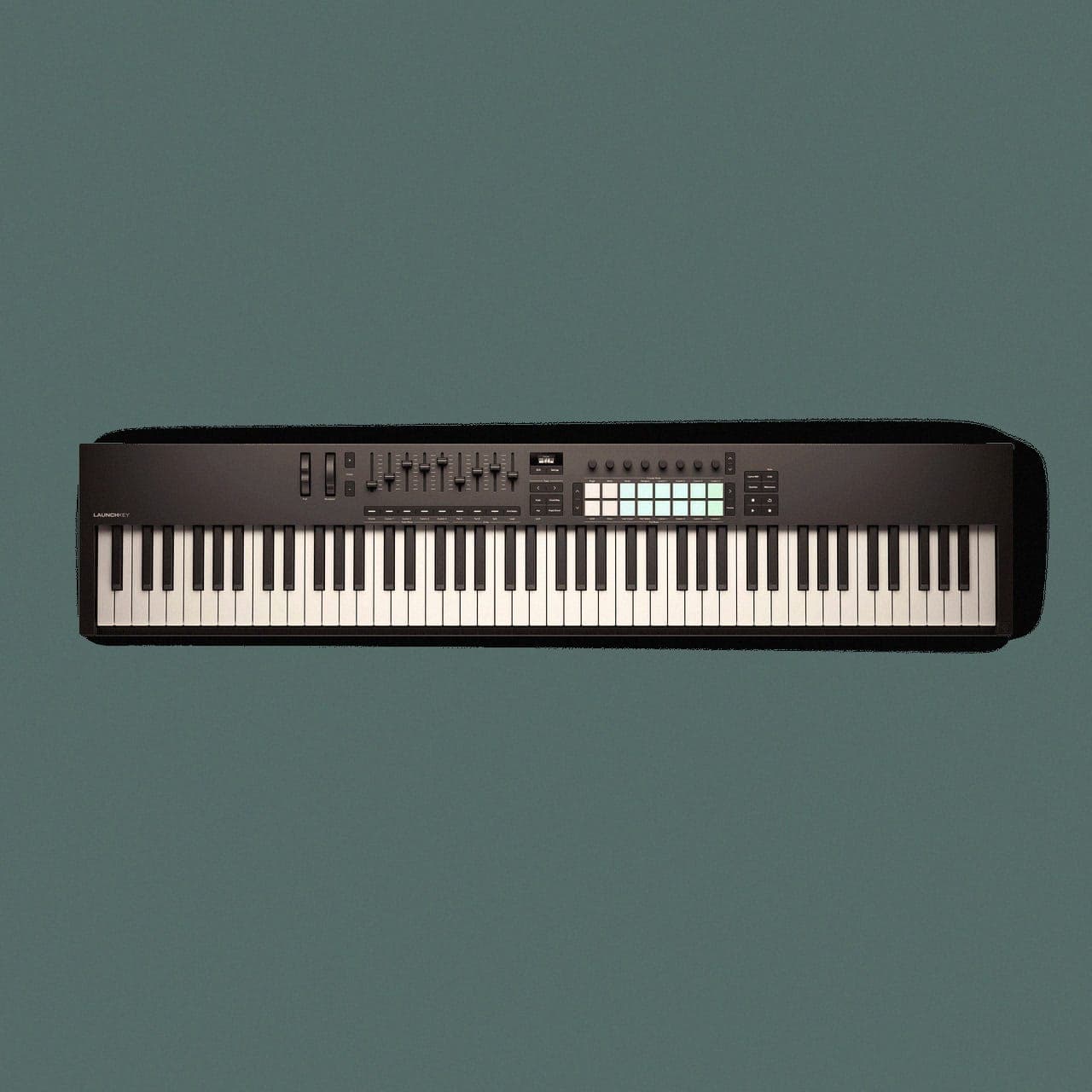
Synido isn't a name most producers know, and that's kind of the point of the TempoKEY K32 Play. It's a 32-key MIDI controller built to work completely unplugged: a rechargeable battery, an onboard speaker, and a built-in General MIDI sound bank so it can make actual sound the moment you turn it on, no DAW, no interface, no laptop lid to open.
What's actually inside it?
The spec sheet reads like a controller aimed squarely at someone sketching ideas on a couch, not tracking a record. Thirty-two velocity-sensitive mini keys, 8 assignable endless knobs, 8 backlit drum pads, an OLED screen for parameter feedback, plus a built-in arpeggiator and note repeat. The sound engine is PCM-based (sampled instrument tones, not synthesis you can sculpt): 16 categories of instrument voices and 10 drum kit variations, including a TR-808-style kit, none of it deeply tweakable beyond swapping which pad triggers what. Connectivity covers Bluetooth MIDI, USB-C, a 3.5mm headphone out and full TRS MIDI in/out, so it can talk to a phone, a DAW, or a small outboard rig. Synido rates the battery at around 5 hours of play per charge.
It's a sketchpad, not a studio in a box: fine for catching an idea, not for finishing a record.
Does an all-in-one battery keyboard actually help a working producer?
Honestly, mostly as a controller, not as an instrument. The GM sound bank is the kind of thing you'd use to hum an idea into a voice memo, useful for capturing a chord progression on a train or in a green room, not for anything you'd keep in a final mix. Where it earns its price is the Bluetooth link into a DAW or a mobile app like GarageBand or FL Studio Mobile: a real controller surface, with pads, knobs and a screen, that doesn't need to be tethered to anything. That's a genuinely useful niche for a bedroom producer who works on a phone half the time, or a DJ who wants to draft ideas between sets without hauling a full rig. It's not replacing an Akai or Arturia controller on a desk, and it shouldn't try to; it's competing with the idea of not bringing a controller at all.
Who is this actually for?
Someone starting out who wants one object that makes sound without a subscription, an interface, or a Bluetooth speaker they have to charge separately. It's a beginner's first hardware, or a working producer's second, travel-only unit. Judged as a standalone instrument it's forgettable; judged as a $150 way to keep working away from the desk, it's a reasonable trade.