For more than a decade, the most useful safety tool in British clubbing only switched on in summer. Drug checking lived on the festival calendar, then went dark from autumn to spring, exactly when the drug market kept mutating. That gap is now closing.
What did The Loop actually win?
In November 2024 the harm-reduction organisation The Loop announced year-round drug monitoring at two of the country's largest clubbing operations: Drumsheds in north London and The Warehouse Project at Depot Mayfield in Manchester. The programmes are funded directly by the venues and run on Home Office licences, the first issued for UK festivals in spring 2024 and, crucially, the first ever granted for venues that autumn.
The significance is the calendar. Festivals are, as The Loop's chief executive Katy Porter put it, a seasonal industry, and seasonal testing leaves the regular clubbing season without reliable drug intelligence. Pinning year-round labs to two permanent, high-volume rooms turns the regular season into a continuous early-warning system.
How does the testing actually work?
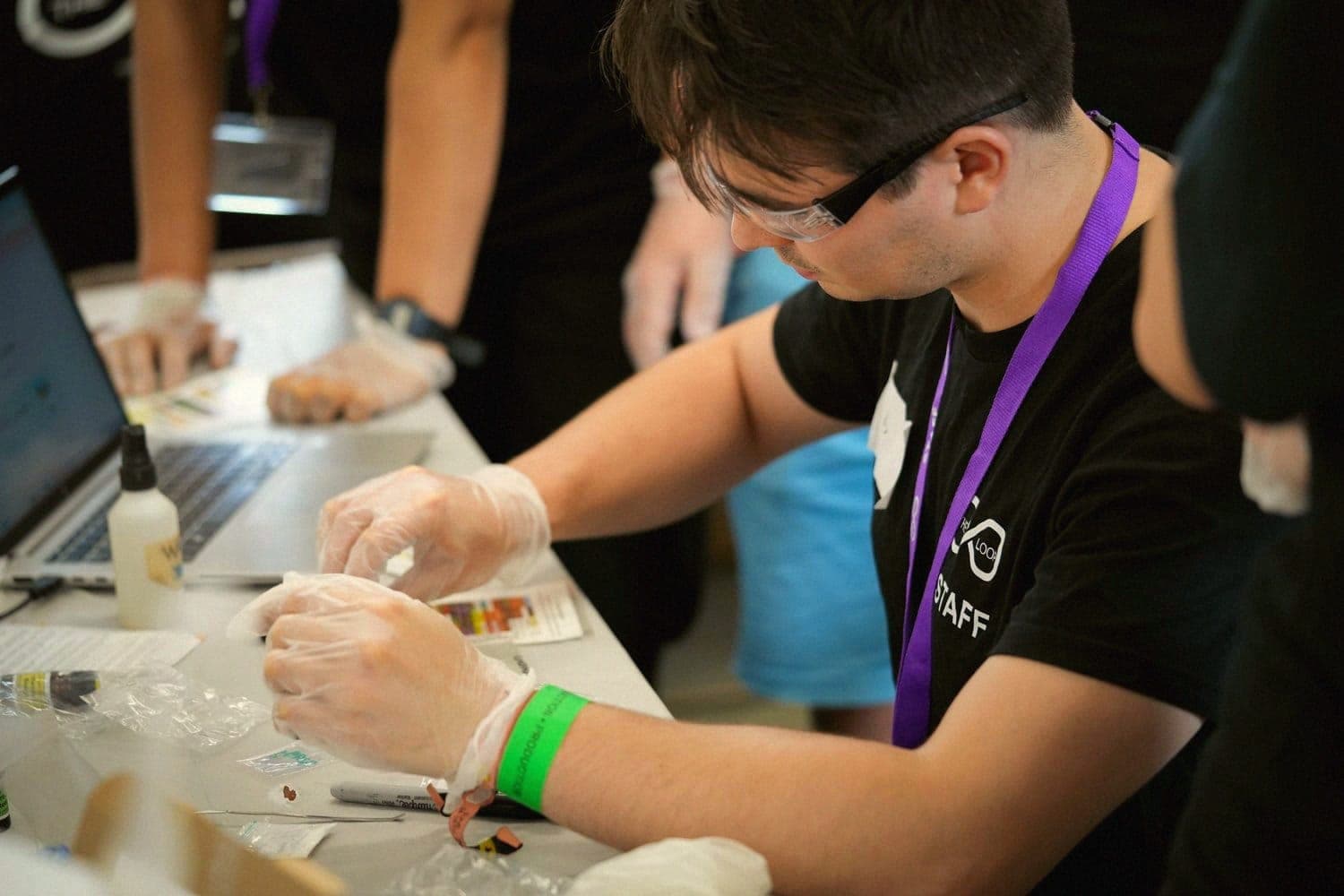
This is not a counter where you hand over a pill and wait. It is back-of-house. Samples come from amnesty bins, confiscations, paramedics on a priority basis and ground finds, then get analysed onsite in a mobile laboratory during opening hours. When something dangerous turns up, a mis-sold substance, an unexpected adulterant, an unusually strong dose, the result is pushed in real time to medics and venue staff and out to the public through alerts and media.
The approach has history. The Loop ran the UK's first back-of-house test at The Warehouse Project in October 2013 and brought testing to festivals from 2014, including a long run at Parklife. The technology is old news to this scene; the year-round, in-venue licence is the new part.
The drugs are in the room whether or not anyone is looking. The only question is whether the people running the night can see what is actually circulating.
Why does this matter beyond the UK?
Because Britain has just produced a replicable template at a moment of record drug-related deaths. A model where the venue pays for its own onsite lab, and the data flows straight to the people who can act on it, is something promoters and policymakers elsewhere can point to. Drumsheds' head of operations Sam Spencer framed it as taking proactive steps for the safety and wellbeing of the audience. For a sector that spends a lot of energy insisting clubs are culture, funding the lab is one of the more honest ways to prove the people on the floor are worth protecting.