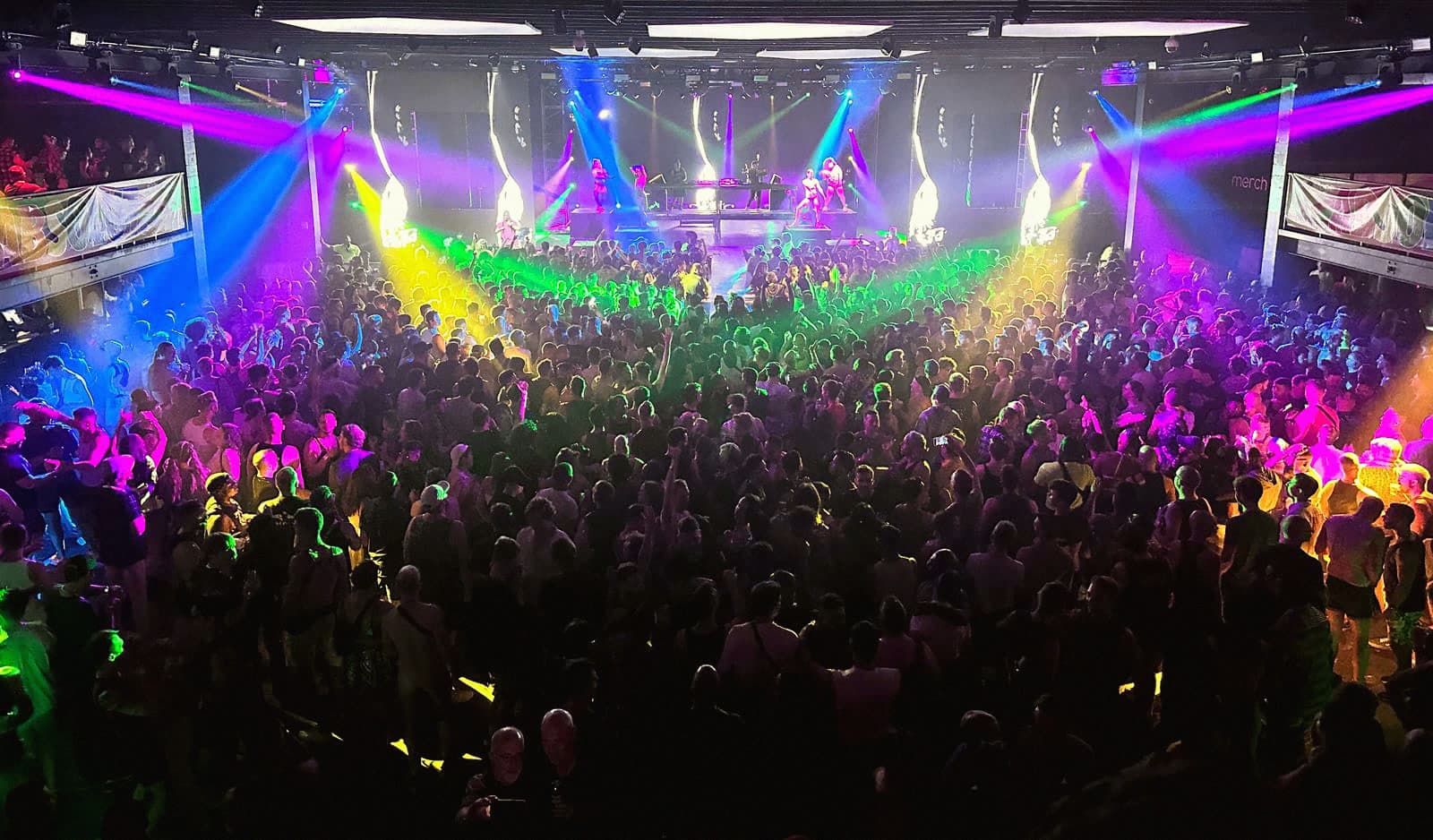
Washington DC's Echostage has swapped its main PA for an L-Acoustics L Series rig, and the reason given by the people who built it is not really about the room. It is about the paperwork. Marc Chauvin, CTO of installer Showtime Sound, put it plainly: "If you look at the EDM world, L-Acoustics is now what's expected. It's in all of the top clubs, and Echostage needed that for the riders of the artists." That is the quiet story underneath a gear announcement. The technical rider, once a list of monitors and a DI count, has become a brand mandate, and the 3,000-capacity room in the Langdon neighborhood just paid to satisfy it.
What did Echostage actually install?
The design is compact for the output. Each side runs one L2 over one L2D, backed by a hang of four KS28 subwoofers flown in cardioid. Low end gets reinforced by sixteen more KS28 on the floor, in eight stacks of two lined across the face of the stage. Out-fills are A15 Focus over two A15 Wide per side, with A15 Wide pairs on ground subs handling front-fill. Amplification is LA7.16i and LA12X controllers, and the DJ booth gets its own Kara II monitor system. Showtime Sound, based in Frederick, Maryland, designed and installed the whole thing, and the production team made a point of how fast the L Series went up and how consistent it measured.
Why does a rider decide a venue's capital budget?
Because the rider is leverage. When the headline acts a room needs to book all specify the same loudspeaker brand, the venue no longer has a real choice between systems on price or taste. It has a checkbox. Miss it and you risk the booking, or you eat the cost of cross-renting a flown system for every relevant show, which is its own slow-motion budget leak. Echostage has been a DJMag Top 100 fixture and topped that poll in 2021, so it sits exactly in the tier where the best touring productions expect their preferred boxes to already be in the air. The install is the cheaper answer over a few seasons. That logic is now repeating across the upper end of the club and festival circuit.
The rider stopped being a wish list and became a barrier to entry, and venues are the ones writing the check.
Is this good for the dancefloor or just for one manufacturer?
Both things are true at once, which is what makes it worth watching. An L2 over cardioid KS28 is a genuinely excellent club system, and a room that sounds consistent night to night is good for everyone standing in it. But standardization at the top also narrows what a venue can be. The character of a space, the slight differences that made one room feel unlike another, gets flattened when the rider dictates the same answer everywhere. For the underground end of house and tech, where smaller rooms often built identity on an idiosyncratic, lovingly tuned system, the pressure to match the big-room spec is a cost that does not show up in any press release.


